The Income Tax Department has rolled out substantial modifications to ITR forms for Assessment Year 2025-26 (Financial Year 2024-25), introducing changes that impact countless taxpayers nationwide. From updated capital gains documentation to enhanced disclosure mandates, this guide provides essential information for accurate and timely return filing.
Table of Contents
Major Amendments and Scheduling Updates
The Central Board of Direct Taxes has provided additional filing time by extending deadlines by 45 days, giving taxpayers extra opportunity to meet updated compliance requirements. The tax administration released ITR-1 and ITR-4 forms on April 29, 2025, subsequently launching ITR-7 for trusts and charitable institutions on May 9, 2025.
Utility availability schedule:
-
ITR-1 and ITR-4: Accessible from May 30, 2025
-
ITR-2 and ITR-3: Made available on July 11, 2025
Currently, digital filing capabilities for ITR-2 and ITR-3 remain unavailable, requiring taxpayers to utilize Excel-based tools until web-based submission becomes operational.
Comprehensive ITR Form Selection Framework
ITR-1 (SAHAJ) – Streamlined Filing Option
Applicable taxpayers: Indian residents (excluding RNOR classification) earning total income up to ₹50 lakhs.
Qualifying income categories:
-
Employment and pension earnings
-
Single residential property only
-
Miscellaneous income sources
-
Agricultural earnings up to ₹5,000
Filing limitations: Unavailable for company board members or holders of non-listed equity securities.
Significant enhancement for FY 2024-25: ITR-1 now accommodates long-term capital gains reporting under Section 112A up to ₹1.25 lakh, streamlining the process for salaried individuals with modest equity returns.
ITR-2 – Advanced Investment Portfolio Filing
Target filers: Individuals and Hindu Undivided Families with varied income streams.
Application scenarios:
-
Multiple property holdings
-
Investment-related capital gains
-
International assets or earnings
-
Corporate board positions
-
Agricultural income above ₹5,000
-
Lottery or special rate income
-
Income exceeding ₹50 lakhs permitted
Notable modifications for FY 2024-25:
-
Distinct reporting mandatory for capital gains occurring before and after July 23, 2024
-
Share buyback capital losses permitted when dividends are classified under “Income from Other Sources” (effective October 1, 2024)
-
Asset and liability disclosure threshold increased to ₹1 crore total income (previously ₹50 lakh)
-
Expanded reporting requirements for deductions under sections 80C, 10(13A)
-
Compulsory TDS section code documentation in Schedule-TDS
ITR-3 – Business and Professional Activity Returns
Mandatory filers: Individuals and HUFs generating business or professional income.
Extended coverage:
-
All income categories included in ITR-2
-
Partnership entity partners
-
Business or professional earnings outside presumptive taxation schemes
Key modifications for FY 2024-25:
-
Split capital gains documentation for pre and post July 23, 2024 transactions
-
Introduction of Section 44BBC for cruise industry operators
-
Share buyback loss handling aligned with updated dividend taxation framework
-
Enhanced detailed reporting for various deduction categories
ITR-4 (SUGAM) – Presumptive Income Scheme Filing
Eligible users: Individuals, HUFs, and firms (excluding LLPs) with income up to ₹50 lakhs.
Scheme coverage:
-
Business income under sections 44AD, 44ADA, 44AE
-
Single property ownership
-
Employment and pension income
Usage restrictions: Inapplicable for corporate directors or non-listed equity holders.
Enhancement: Now incorporates LTCG reporting up to ₹1.25 lakh under Section 112A.
ITR-5, ITR-6, and ITR-7 Categories
ITR-5: Designed for partnerships, LLPs, associations, investment entities
ITR-6: Created for companies not seeking Section 11 exemptions
ITR-7: Tailored for trusts, charitable institutions, and entities under sections 139(4A)-(4D)
Essential Compliance Requirements for FY 2024-25
Form 10-IEA Documentation
Taxpayers choosing the old tax regime while filing ITR-3 or ITR-4 with business income must complete Form 10-IEA. This mandate ensures appropriate documentation of tax regime selection.
Capital Gains Documentation Revisions
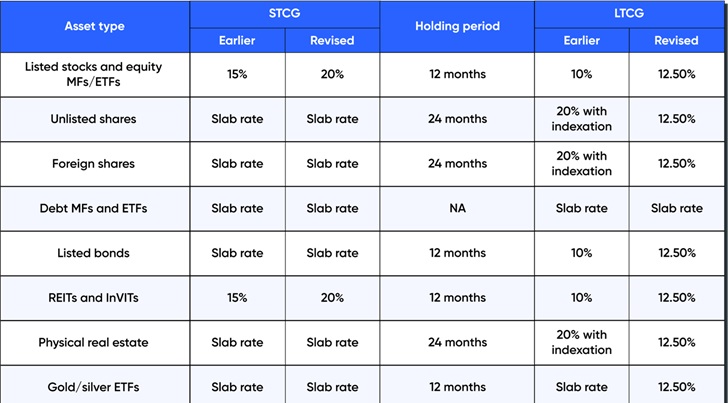
The most substantial modification impacts capital gains reporting due to Finance Act 2024 changes taking effect July 23, 2024:
-
Transactions before July 23, 2024: Apply previous tax rates and regulations
-
Transactions after July 23, 2024: Use revised tax rates without indexation advantages
-
Separate documentation required for both timeframes in ITR-2 and ITR-3
Asset Reporting Threshold Adjustment
The asset and liability documentation requirement has been modified. Previously required for total income exceeding ₹50 lakh, it now applies only when total income surpasses ₹1 crore.
Detailed Filing Methodology
Excel Utility Process (ITR-2 and ITR-3)
-
Obtain the relevant Excel utility from the Income Tax portal’s download section
-
Extract the compressed file and access the spreadsheet
-
Enter information across applicable schedules
-
Create XML/JSON file following validation
-
Transfer the file via the electronic filing platform
-
Complete return submission
-
Authenticate within 30 days of filing
Digital Filing Method (ITR-1 and ITR-4)
Taxpayers may select between:
-
Offline approach: Utilizing downloadable Excel utilities
-
Online approach: Direct web-based submission through the platform
Critical Timelines and Compliance Consequences
While the CBDT has provided additional filing time through 45-day extensions, taxpayers should:
-
Submit returns promptly to prevent last-minute technical complications
-
Verify accurate form selection to avoid rejection
-
Preserve comprehensive documentation for all claims and disclosures
Compliance reminder: Inappropriate form selection may result in return rejection and potential financial penalties. International asset non-disclosure may incur penalties reaching ₹10 lakh.
Professional Guidance
-
Examine eligibility thoroughly before ITR form selection
-
Organize capital gains documentation with clear pre/post July 23, 2024 separation
-
Preserve TDS certificates with accurate section codes for precise reporting
-
Seek expert consultation for complex situations involving international assets, multiple income sources, or business earnings
Summary
The revised ITR forms for FY 2024-25 demonstrate the administration’s commitment to simplifying tax compliance while ensuring thorough income documentation. Through adequate preparation and comprehension of new requirements, taxpayers can effectively manage these modifications and maintain tax compliance.
Always obtain forms exclusively from official Income Tax Department sources and verify all information before submission to guarantee accurate and punctual filing.